The Idea Group

WORKING CASE FILE

Project Updates

Can a shorter update create better decisions?

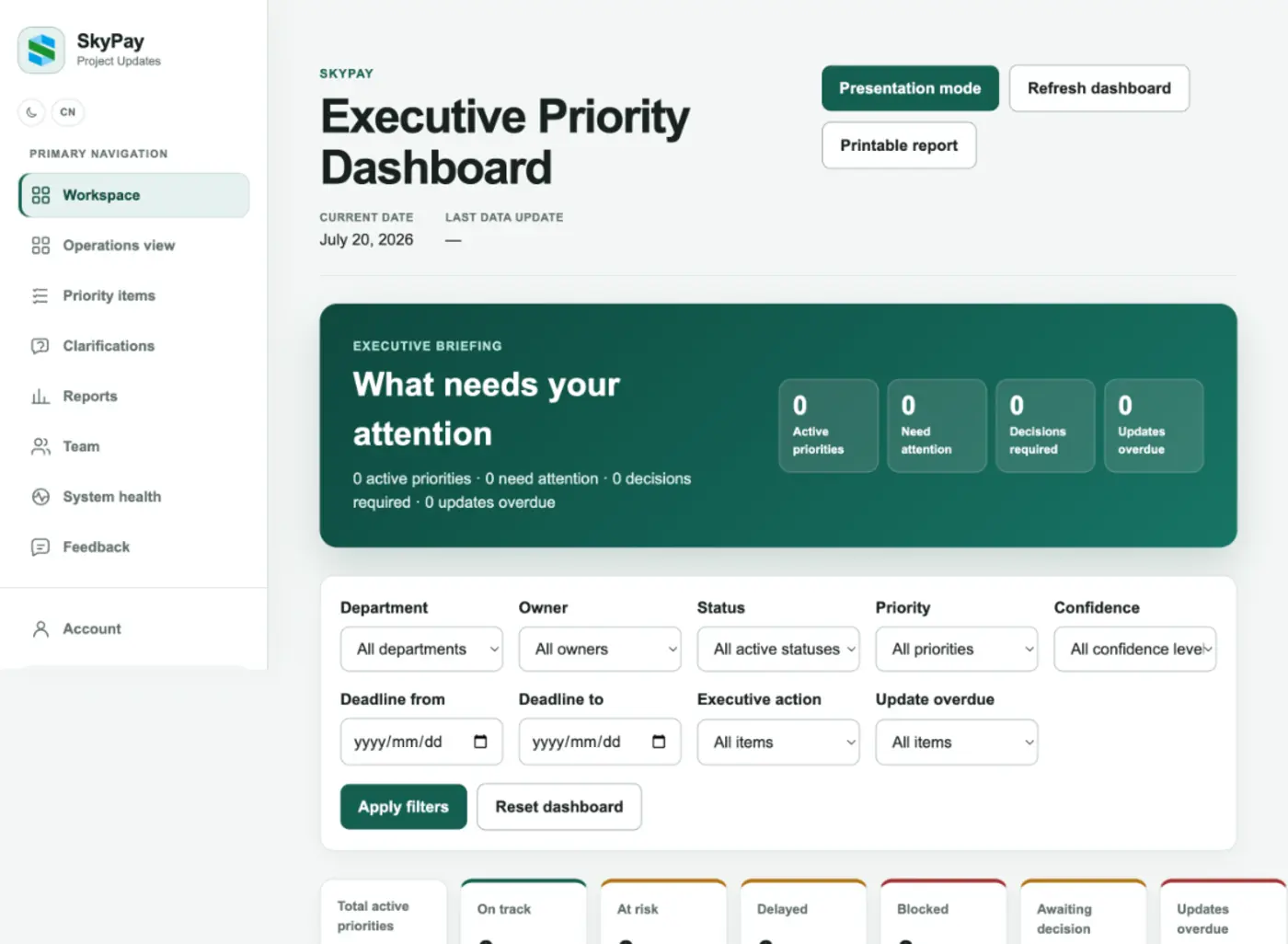
Executive Priority Dashboard showing an attention summary, filters, and priority status cards
Executive view · demonstration workspace

01 / THE SIGNAL

What kept happening?

Status reports often record activity while hiding movement, risk, ownership, and the next decision. This case file follows a working response built around those four things.

  • More reporting did not necessarily create more visibility.
  • Important risks and decisions could remain buried inside activity summaries.
  • A useful response needed to reduce noise without removing context leaders need.
02 / THE RESPONSE

What was built to test it?

  1. 01

    Movement

    State what materially changed since the previous update.

  2. 02

    Risk

    Name what could prevent the next meaningful move.

  3. 03

    Ownership

    Make the person responsible for the next action visible.

  4. 04

    Decision

    End with the decision needed, not another information dump.

02B / THE WORKING INTERFACE

One update.
Three decision surfaces.

PRIVATE WORKING BUILD

The same project information is organised differently for executives, operations, and project owners. Each view starts with the decision that role needs to make.

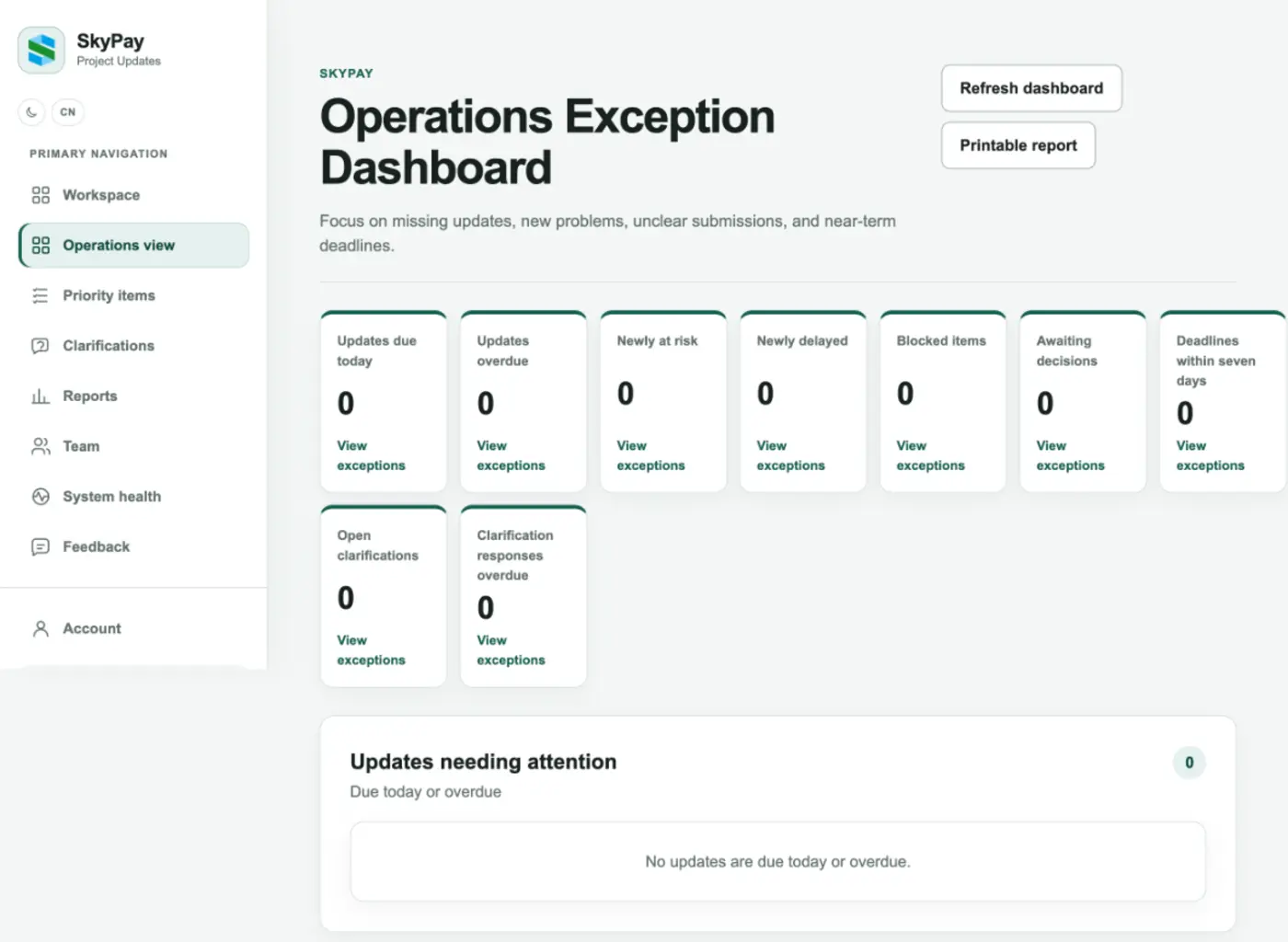
Operations Exception Dashboard grouping overdue updates, new risks, delays, blockers, decisions, clarifications, and deadlines
01 / EXCEPTION VIEW

Where does follow-up belong?

Due updates, new risks, delays, blockers, unanswered clarifications, and near-term deadlines are grouped into one exception queue.

The intended shift: spend time on the gaps instead of chasing every department equally.

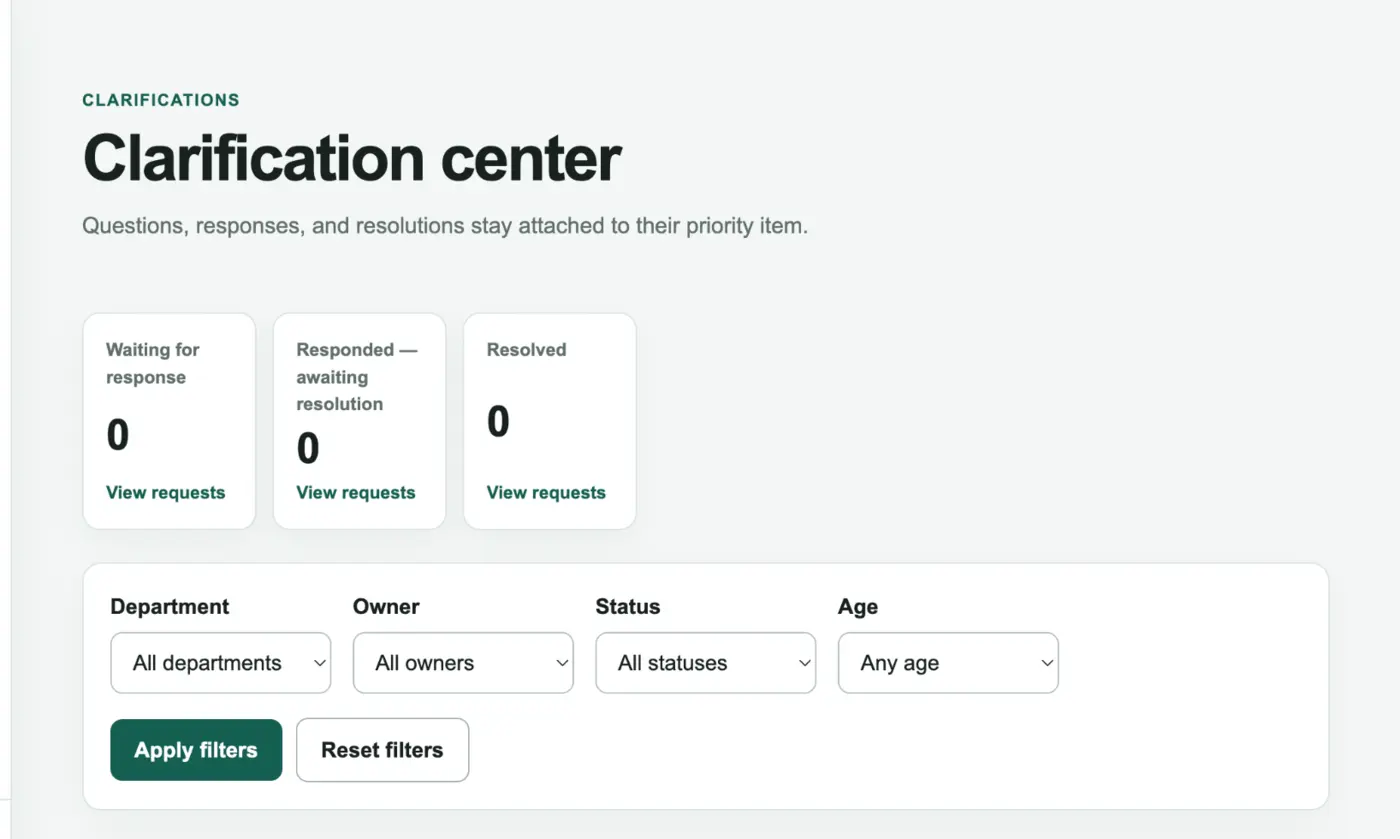
Clarification Center with response states and filters for department, owner, status, and age
02 / CLARIFICATION LOOP

Can a question stay attached to the work?

Requests, responses, and resolution states remain connected to the relevant priority, preserving the context behind a delay or decision.

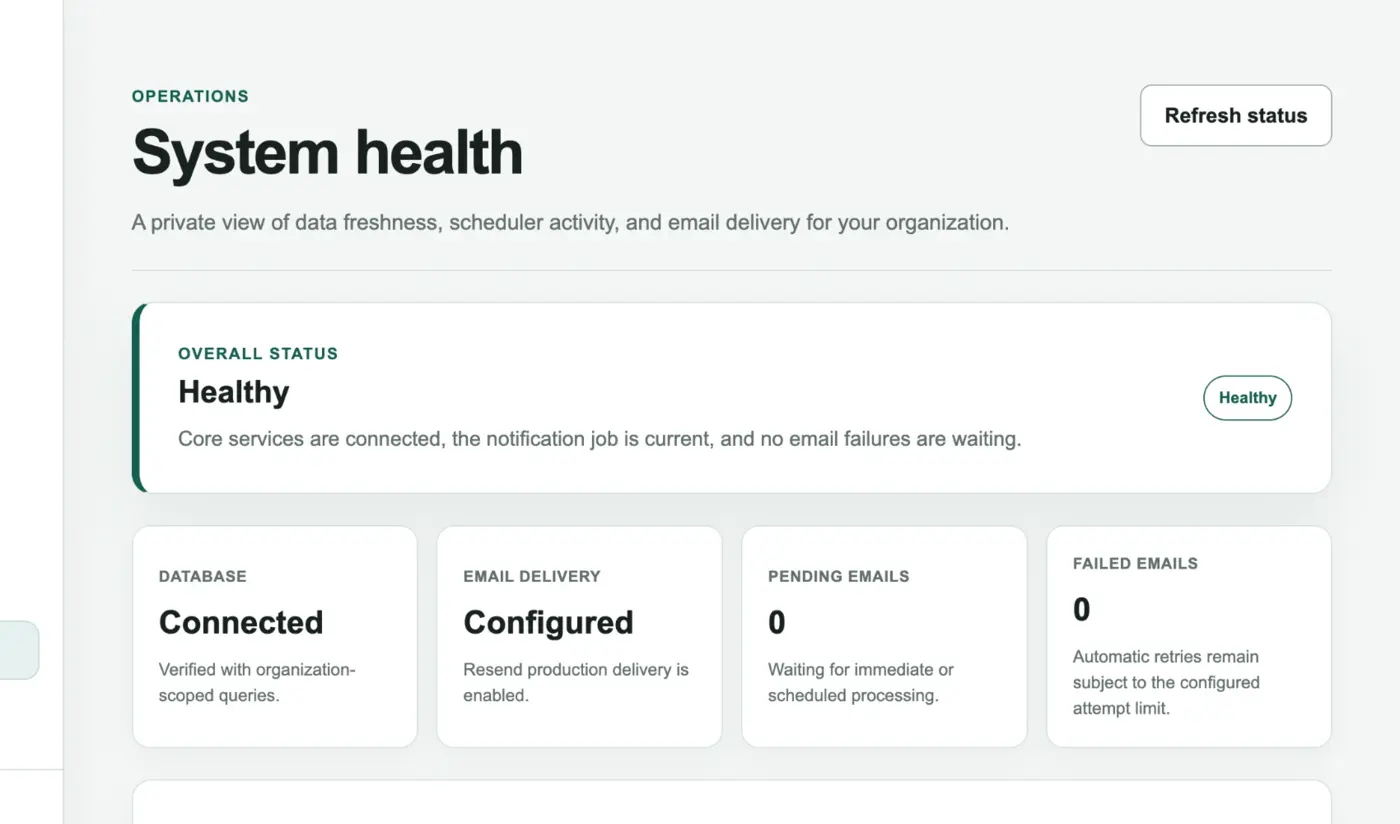
System Health view showing database connection, email delivery, pending messages, failures, and recent activity
03 / TRUST LAYER

Can the team trust the signal?

Data freshness, scheduled activity, and email delivery are visible to operations without exposing private messages, service keys, or other organisations.

03 / THE EVIDENCE LEDGER

What can be said—today?

The language stays proportional to the evidence.

SUPPORTED

What is known

  • A private, role-based working application has been built.
  • Executive, operations, priority, clarification, reporting, and system-health views exist.
  • The system is ready for a live reporting pilot.
HELD BACK

What is not claimed

  • Organisation-wide adoption.
  • Faster or better decisions.
  • Reduced meeting or reporting time.
NEEDED NEXT

Evidence to look for

  • Whether leaders can identify movement, risk, ownership, and the next decision quickly.
  • Whether project owners find the shorter format useful under normal working conditions.
  • What the pilot team removes, changes, or keeps after repeated use.

04 / OPEN QUESTIONS

The case is still moving.

These questions determine what should happen next and what a stronger claim would require.

  1. 01

    Which team has enough recurring work to provide a fair pilot?

  2. 02

    What would count as a meaningfully better decision?

  3. 03

    How many reporting cycles are needed before the format can be judged?

NEXT CASE FILE

Just 3

Can a strict limit of three priorities improve daily choices?

Open case 02